

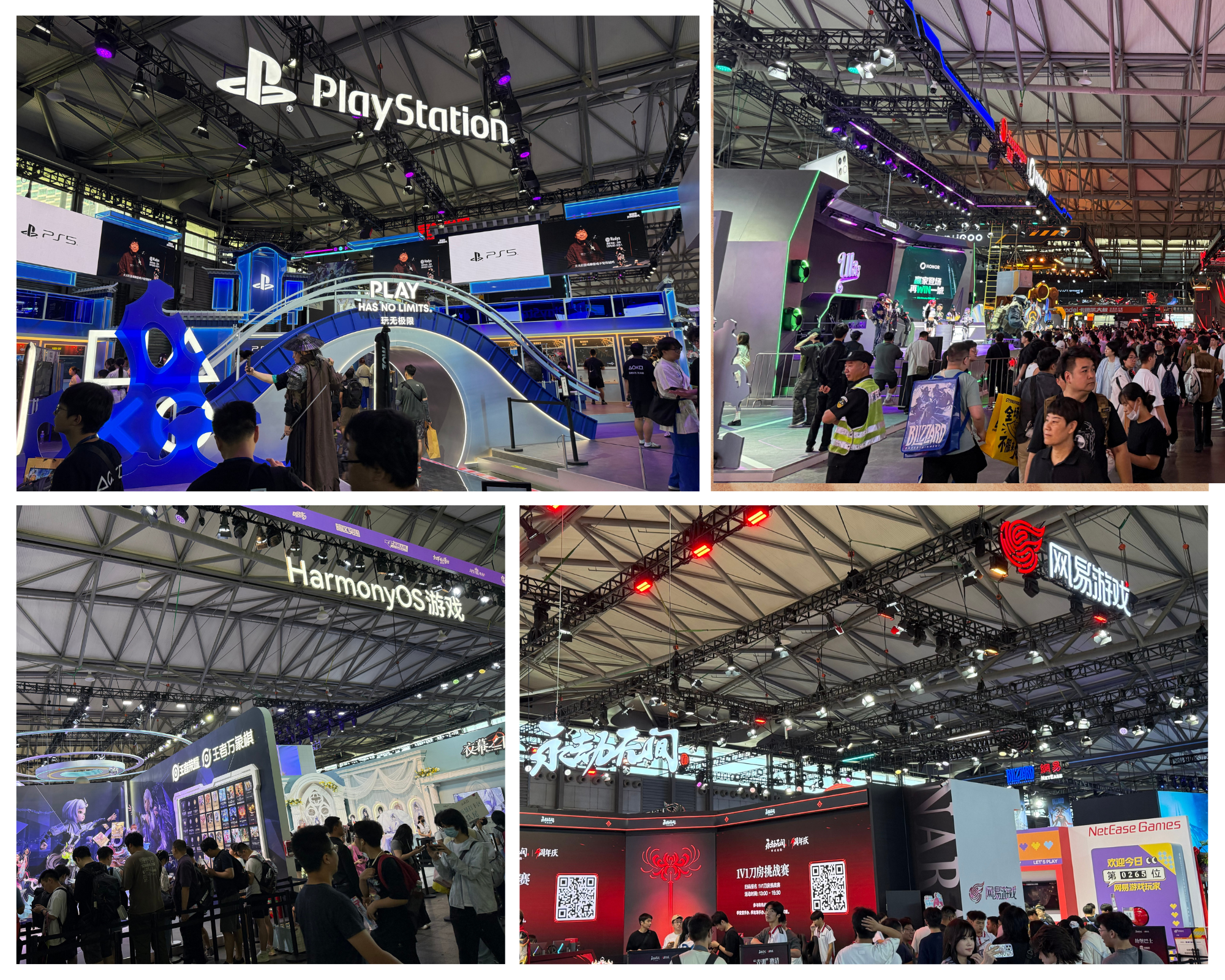
Niko Partners Vice President Xiaofeng Zeng reflected on his observations of ChinaJoy in this new blog post. Niko Partners has attended every ChinaJoy since the first one, which was held in Beijing in January 2004 (postponed from July 2003.)
The 23rd China Digital Entertainment Expo & Conference (ChinaJoy 2026) concluded in Shanghai with record attendance, underscoring the continued strength of China’s games industry while highlighting its evolution into a broader digital entertainment and technology exhibition. Organizers reported 438,900 visitors over the four-day event, a 7% YoY increase, with more than 900 companies from 35 countries and regions participating. Professional attendance also reached a record 44,000 visitors, with 21% coming from overseas, reflecting China’s continued importance as a business destination for the global games industry despite broader geopolitical challenges. Approximately 65% of attendees were between 18 and 29 years old, reinforcing the event’s importance among younger consumers.
The show’s central theme, “Level Up with AI,” was reflected throughout both the exhibition halls and conference program. According to China Audio-video and Digital Publishing Association (CADPA) Chairman Sun Shoushan, approximately 86% of Chinese game developers now utilize AI technologies in some capacity. AI applications were showcased across game development, asset generation, production pipelines, and player experiences, while ChinaJoy introduced several AI focused initiatives for the first time. The new Next Play AI exhibition enabled visitors with no programming experience to generate playable games using natural language prompts, illustrating how AI native creation tools are lowering development barriers, while the Vision Future exhibition showcased robotics, AI foundation models, and smart wearable technologies. At the same time, CADPA emphasized that AI should remain an efficiency tool rather than replace human creativity, warning against excessive reliance on technology at the expense of cultural expression and original design.
What’s different this year
While gaming remained the largest attraction, visitor traffic appeared more evenly distributed than in previous years due to improved venue planning and crowd management. We saw lower congestion in the traditional gaming halls N1 to N4, while crowds were definitely larger in N5 and E3 to E7, which focused on consumer electronics, hardware, and broader entertainment products. Hardware manufacturers, audio brands, imaging companies, and peripheral vendors maintained significantly larger presences than in previous years, further reinforcing ChinaJoy’s transition toward a comprehensive digital entertainment exhibition. However, we noticed there were still long lines in N1, for global brands such as PlayStation, N3, home to major Chinese publishers including NetEase, and N5, which featured smartphone manufacturers. Our conversations with developers at the event indicated that cross platform gaming has become a major trend with publishers requesting cross platform licenses from the NPPA over mobile only licenses, reflecting changing player expectations and the growing importance of unified PC, console, and mobile ecosystems. Correspondingly, most titles exhibited within the consumer halls supported multiple platforms rather than being exclusively mobile or PC only releases.

Compared with previous years, fewer major AAA titles were announced or showcased, and international publishers maintained relatively limited presences across both the business and consumer exhibition areas. The B2B halls were dominated by technology vendors, middleware providers, localization specialists, and overseas service companies seeking partnerships with Chinese publishers looking to take their games out of the country. At the same time, independent development expanded significantly. The ChinaJoy Express area brought together indie studios from more than ten countries, including China, the United States, Japan, and the United Kingdom, providing international developers with a dedicated platform to showcase culturally distinct projects and experimental gameplay concepts. ChinaJoy was also part of a broader concentration of gaming events in Shanghai. Bilibili World 2026 attracted approximately 400,000 visitors in July, while the Hypergryph Carnival 2026 welcomed around 70,000 attendees during the same period. Together, these events illustrate Shanghai’s emergence as one of the world’s largest gaming and ACGN event destinations.
While fewer AAA game announcements reduced the event’s role as a traditional product showcase, a mix of record attendance, expanding international participation, and growing representation from adjacent technology sectors reinforce ChinaJoy’s position as China’s leading international games exhibition and as an increasingly important platform for the country’s wider digital entertainment ecosystem. Get in touch with us for actionable insights on the world’s single largest video games market.
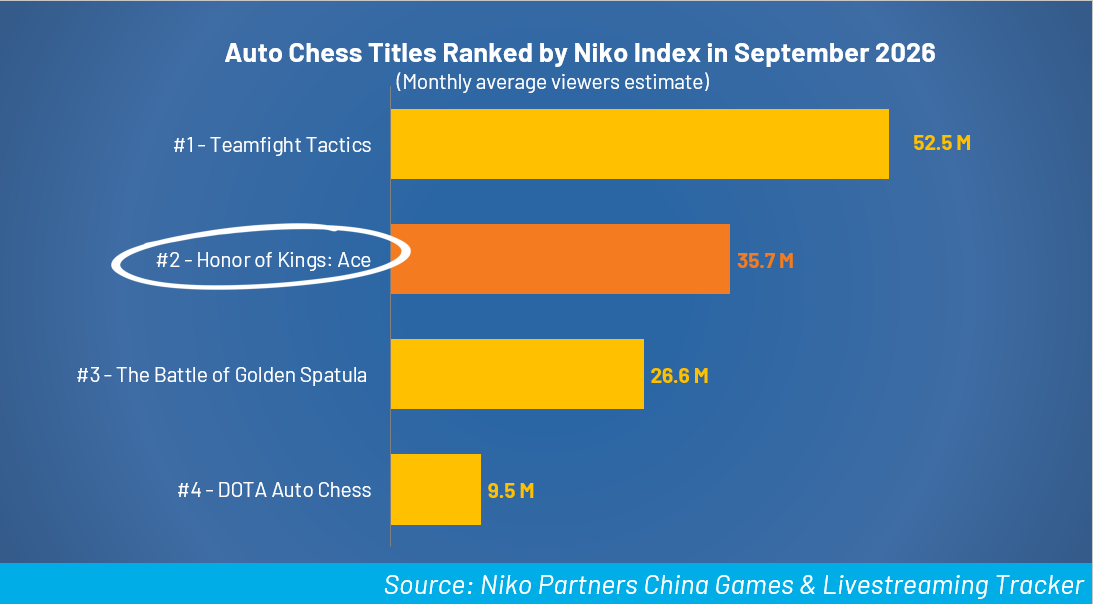
Auto chess dominated China’s livestreaming landscape in August 2026, standing out as some of the month’s most-watched content. Niko Partners China Learn more >

RPG titles dominated China’s livestreaming landscape in August 2026, standing out as some of the month’s most-watched content. Niko Partners Learn more >

China’s video game market reached a new milestone in 2025, generating $51.8 billion in revenue, up 5.4% year-over-year and surpassing Learn more >
Auto chess dominated China’s livestreaming landscape in August 2026, standing out as some of the month’s most-watched content. Niko Partners China Learn more >
RPG titles dominated China’s livestreaming landscape in August 2026, standing out as some of the month’s most-watched content. Niko Partners Learn more >
China’s video game market reached a new milestone in 2025, generating $51.8 billion in revenue, up 5.4% year-over-year and surpassing Learn more >